
Sustainable House Design for Hot Climate Cities: A Coimbatore 2026 Guide
Written by: Adhithya, Content Writer
Published on: Mar 24, 2026
Technical Review by: Vaishali S, Principal Architect at Swasthik Architectural Studio
A home built correctly for Coimbatore's climate can stay 4 to 5 degrees Celsius cooler than a standard construction without running air conditioning through the day. This is not a claim about future technology. It is what properly oriented, well-ventilated homes with the right materials already achieve today, and it directly reduces your monthly electricity bill by 30 to 40 percent over the life of the building.
This guide covers the practical strategies behind sustainable house design for hot climate cities, specifically tailored for Coimbatore and its surrounding regions including Tiruppur, Mettupalayam, and Pollachi.
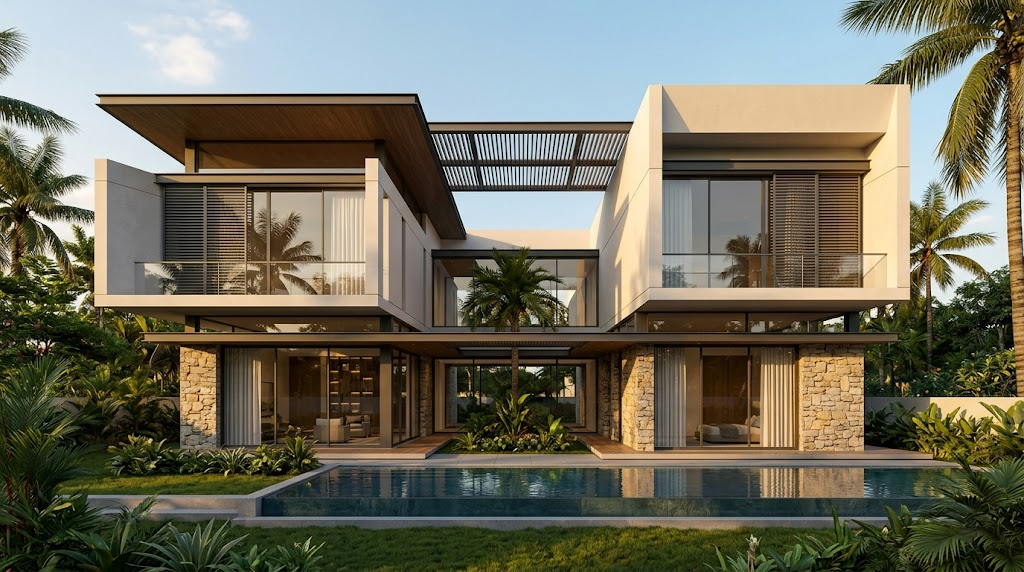
Why Sustainable Design Is Not Optional in Coimbatore
Coimbatore's average summer temperatures have risen consistently over the past decade. Homes built without climate consideration are dependent on mechanical cooling from day one, creating a lifelong operational cost that far exceeds the modest premium of sustainable construction at the build stage.
Beyond the cost, there is a comfort and health dimension. Homes that rely entirely on air conditioning tend to have poor natural light, limited ventilation, and a disconnection from the outdoor environment. Sustainable design creates homes that feel genuinely alive, naturally cool, and pleasant to live in without constant mechanical intervention.
The sustainable approach also aligns closely with Vastu principles. As we covered in our guide on Vastu and modern house design in Coimbatore, both systems prioritize orientation, natural light, and airflow as the foundation of a healthy home.
Orientation: The First and Most Important Decision
How your home is positioned on its plot determines how much heat it absorbs every single day for the life of the building. This single decision, made once during the design phase, has decades of consequences for your comfort and energy bills.
For Coimbatore's climate, the best approach is to place primary living spaces along the north and east facades. These faces receive gentle, low-intensity light. The south and west facades, which bear the harshest afternoon sun, should be protected by solid walls, minimal windows, or shading elements like deep overhangs and louvred screens.
| Building Facade | Sun Exposure in Coimbatore | Design Recommendation |
|---|---|---|
| North | Cool, diffused light all day | Large windows, main living spaces, courtyard entry |
| East | Morning sun at low angle | Moderate windows, bedrooms, main entrance |
| South | Intense mid-day sun | Minimal openings, use shading devices and overhangs |
| West | Harsh afternoon sun | Solid walls or louvred screens, vertical gardens |
Passive Cooling Techniques That Actually Work in Tamil Nadu
Passive cooling is the practice of managing indoor temperatures through design rather than machinery. These techniques have been used in Tamil Nadu's traditional architecture for centuries, and modern building science has validated and refined them for contemporary construction.
| Technique | How It Works | Best Application |
|---|---|---|
| Cross Ventilation | Openings on opposite walls create a natural airflow path | Living rooms, corridors, bedrooms |
| Stack Ventilation | Hot air rises and exits through high vents naturally | Central halls, stairwells, double-height spaces |
| Night Flushing | Open windows at night to flush out accumulated heat | Bedrooms and all occupied rooms |
| Courtyard Design | Central open space acts as a natural thermal chimney | Whole-house airflow management |
| Evaporative Cooling | Water features near the entry lower incoming air temperature | Entrance zones, courtyard areas |
| Roof Insulation | Prevents radiant heat transfer from the roof into living spaces | All rooms directly below the roof |
The most powerful of these is the courtyard house design. A well-proportioned central courtyard improves airflow through every surrounding room and reduces indoor temperatures measurably. You can see this approach in the Sasikumar Residence in Manikarampalayam and the Babu Residence, both of which use courtyard-based ventilation as a core design feature.
Best Sustainable Building Materials for Coimbatore
Material selection directly affects how much heat your home absorbs and retains. The right materials create a building that is inherently cooler, without requiring additional insulation systems or extra mechanical cooling.
| Material | Thermal Benefit | Best Use Location |
|---|---|---|
| Fly-Ash Bricks | Higher thermal mass, slower heat transfer | External load-bearing walls |
| AAC Blocks (Autoclaved Aerated Concrete) | Lightweight, excellent thermal insulation | Internal partition walls |
| Porotherm Clay Blocks | Natural breathability, good insulation value | External walls in hot zones |
| Kota Stone or Granite Flooring | Stays cool underfoot, high thermal mass | All floor areas, courtyard |
| Lime Plaster (Exterior) | Breathable, naturally reflective, reduces moisture retention | Exterior wall finish |
| High-Albedo Roof Tiles or Coating | Reflects sunlight, reduces roof surface temperature | Roof and terrace areas |
| Double Pane Windows | Reduces heat gain, improves acoustic comfort | South and west facing openings |
| Locally Sourced Stone Cladding | Natural insulation, reduces urban heat island effect | Exterior facade cladding |
Natural Ventilation Strategies for Hot Cities
Good ventilation design removes heat and humidity from living spaces continuously, without a single watt of electricity consumed. There are several strategies we apply in Coimbatore residential projects.
Cross-ventilation requires openings on at least two opposing walls in every primary room. Windows should be placed at different heights to allow hot air to exit through higher openings while cooler air enters from below. Stack ventilation uses the same principle at a building scale, with a tall central space or courtyard drawing warm air upward and out continuously.
Jaali screens, which are perforated stone or brick screens from Tamil Nadu's traditional architecture, are an excellent element that modern homes in Coimbatore are rediscovering. They allow constant airflow without direct sun penetration, making them ideal for western facades where sun protection is most critical.
Water Conservation and Rainwater Harvesting
Tamil Nadu receives a significant portion of its annual rainfall during the northeast monsoon between October and December. A well-designed rainwater harvesting system captures this resource and either recharges the groundwater table or stores water for household use.
For residential projects in Coimbatore, we recommend a dual approach: a surface runoff collection channel around the building perimeter feeding into recharge pits, and a rooftop harvesting system that channels water through a first-flush filter into an underground storage sump. A standard 2,000 square foot roof can harvest approximately 1.2 to 1.5 lakh litres of water during a single monsoon season.
This investment pays back quickly in areas with water supply limitations, particularly in developing localities around Mettupalayam, Pollachi, and the outer areas of Tiruppur.
Solar Energy for Tamil Nadu Residences in 2026
Tamil Nadu receives an average of 5.5 to 6 peak sun hours per day, making it one of the best states in India for rooftop solar energy generation. For a standard 1,500 square foot home, a 3 kW rooftop solar system can generate enough electricity to cover most of the daytime load, including lighting, fans, and kitchen appliances.
Installing a solar system at the construction stage is far more cost-effective than retrofitting later, because the roof structure, electrical wiring, and conduit routing can all be planned to accommodate the panels from the beginning. In 2026, a grid-tied solar system with net metering in Tamil Nadu can recover its investment within 5 to 7 years, with virtually zero maintenance thereafter.
We include solar-ready roof design as a standard consideration in all premium residential projects. Visit our architecture services page to see how solar integration is planned from the design stage.
Biophilic Design: Using Nature as a Cooling Strategy
Biophilic design is the practice of integrating natural elements into the built environment, not just as decoration, but as functional components of the thermal and psychological comfort of the home.
At the landscape level, planting large native trees such as neem, peepal, or tamarind on the south and west sides of your home provides natural shading that reduces wall surface temperatures by 8 to 10 degrees. Native species require minimal irrigation and support local biodiversity, making them the most sustainable landscaping choice for Coimbatore's climate.
Vertical gardens on south-facing walls provide thermal insulation, improve air quality, and create a striking visual element for the home's exterior. Indoors, placing plants in naturally lit corridors and living spaces improves air quality and reduces the psychological sense of heat in a room.
Does Sustainable Construction Cost More?
Yes, slightly, at the initial stage. Sustainable materials, solar systems, and rainwater harvesting typically add 8 to 12 percent to the base construction cost. However, the operational savings in electricity and water bills recover this premium within 6 to 8 years, after which the home costs significantly less to maintain than a conventionally built alternative.
Given that the house construction cost in Coimbatore for a premium project already ranges from Rs. 2,800 to Rs. 3,500 per square foot, adding Rs. 250 to Rs. 350 per square foot for sustainable features is a sound long-term investment. Read our complete house construction cost guide for Coimbatore 2026 for a detailed breakdown of how to budget these features into your project.
If you are planning a new home or want to upgrade an existing property with sustainable features, our renovation services page covers how we approach green renovation projects in Coimbatore and the surrounding regions. You can also reach our team directly through the contact page to discuss your specific project requirements.
Frequently Asked Questions
Passive cooling is a set of design techniques that manage indoor temperatures without mechanical systems. In Coimbatore’s climate, a well-designed passive cooling strategy using orientation, courtyard design, cross-ventilation, and high-thermal-mass materials can reduce indoor temperatures by 4 to 6 degrees Celsius compared to a standard construction, making a significant and measurable difference in daily comfort.
Fly-ash bricks or Porotherm clay blocks for external walls, combined with Kota stone or granite flooring, provide excellent thermal performance. A high-albedo roof coating or reflective roof tile is equally important, as the roof is the single largest source of heat gain in a single-storey home. Using all three together produces the best results.
A basic rainwater harvesting system with a first-flush filter and recharge pit costs between Rs. 25,000 and Rs. 50,000. A more comprehensive system with underground storage and a pump connection costs between Rs. 80,000 and Rs. 1.5 lakhs, depending on storage capacity and the materials used.
Yes. With over 300 sunny days per year and net metering available from TANGEDCO, a rooftop solar system for a residential home in Coimbatore has a payback period of 5 to 7 years. After that, your daytime electricity is effectively free for the remaining lifespan of the panels, which is typically 25 years or more.
Yes. Sustainable design principles including correct orientation, cross-ventilation, thermal mass materials, and rooftop solar panels work effectively on plots of any size. For smaller plots, compact rainwater harvesting systems and vertical gardens make sustainability achievable even within tight space constraints.
The best starting point is a conversation with an architect who specializes in climate-responsive design before you finalize your plot purchase or construction plans. Early decisions about orientation and material selection have the greatest long-term impact on sustainability outcomes. Reach out to our team at Swasthik Architectural Studio to begin the conversation.