
Vastu and Modern House Design: A Practical Guide for Coimbatore Homes
Written by: Adhithya, Content Writer
Published on: Mar 13, 2026
Technical Review by: Vaishali S, Principal Architect at Swasthik Architectural Studio
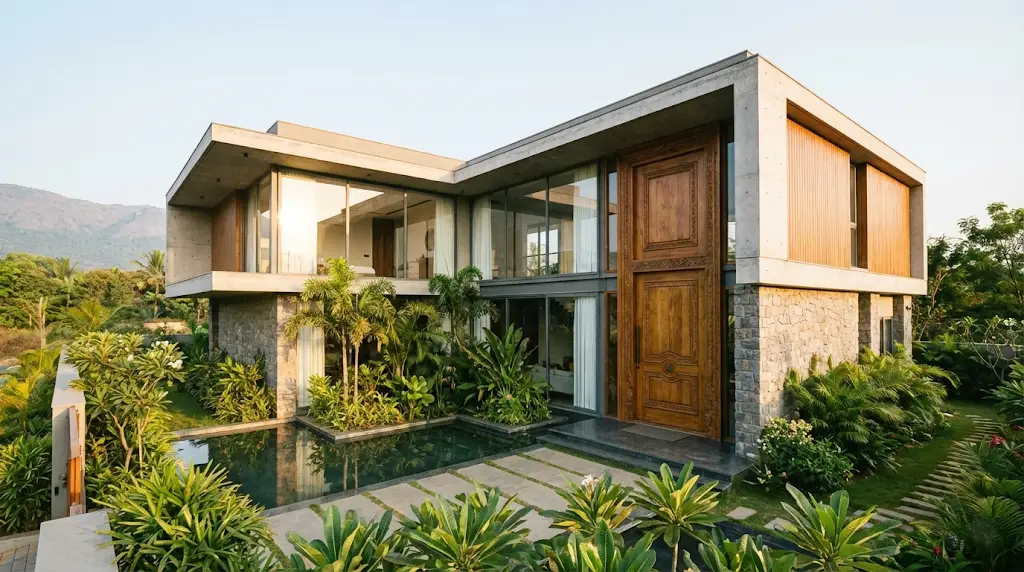
Vastu Shastra and modern architecture are not opposites. In Coimbatore, where families value both tradition and contemporary living, the homes that feel most complete are those where Vastu principles are applied with purpose, not superstition, and where modern design solves real problems of light, ventilation, and space.
This guide breaks down how to combine both approaches in a way that is practical, climate-appropriate, and genuinely beautiful for homes across Coimbatore, Saravanampatti, Pollachi, RS Puram, and Tiruppur.
Why Vastu Still Matters in 2026
Vastu Shastra at its core is a system of spatial logic developed for the Indian climate and lifestyle. It governs how rooms are positioned relative to the sun, how light enters a space, and how air circulates through a home. When these principles are followed thoughtfully, the result is a home that feels naturally comfortable, well-lit, and peaceful.
The problem arises when Vastu is applied rigidly without considering the actual plot shape, road direction, or local climate. This is where working with an experienced architect makes the real difference. The job of a good architect is to apply these principles intelligently, adapting them to your specific site and family needs without compromising the quality of design.
For families building new homes, understanding construction costs alongside design principles is equally important. Our complete guide to house construction cost in Coimbatore 2026 covers budgeting for every aspect of the build.
Orientation and the Main Entrance: Where Energy Enters First
The direction your main entrance faces is one of the most foundational decisions in both Vastu and climate-responsive design. East and north-facing entrances are traditionally preferred because they invite the gentle morning sun and align with the cooler northern breezes in Tamil Nadu's climate.
| Entrance Direction | Vastu Recommendation | Climate Benefit in Coimbatore |
|---|---|---|
| East Facing | Highly auspicious | Morning sun, bright natural light, lower afternoon heat |
| North Facing | Auspicious | Cool diffused light throughout the day, minimal heat gain |
| West Facing | Acceptable with corrections | Afternoon sun, requires shade elements at entry |
| South Facing | Requires careful design | Intense sun exposure, needs deep portico and screening |
For a real example of this principle in action, the Mrs. Archana Residence was designed with an east-facing entrance that maximizes morning light and creates a welcoming first impression while managing afternoon heat through deep overhangs and landscape screening.
If your plot does not allow for an east or north entrance, an experienced architect can use projecting porticos, shading screens, or directional landscaping to manage both the energy and the heat load without abandoning the spirit of Vastu.
Kitchen Placement for a Healthy, Functional Home
The southeast corner is the recommended location for the kitchen in Vastu, and there is a sound practical reason behind it. In Tamil Nadu's climate, the southeast receives reliable morning sun that helps maintain hygiene and keeps the cooking area dry. Positioning the stove away from the sink also respects the fire-water separation that Vastu prescribes, which happens to reflect good kitchen design practice as well.
For modern open kitchens, which are popular in premium residences across Coimbatore and the surrounding region, visual separation using a kitchen island or a change in flooring material respects both the Vastu principle and the contemporary open-plan aesthetic. This design approach is something we apply regularly in our premium residential projects.
To understand how we approach kitchen and interior layouts in detail, visit our interior design services page.
Master Bedroom: Designing for Rest and Stability
The southwest corner is recommended for the master bedroom because it is associated with stability and restful energy in Vastu. In practical terms, the southwest corner of a home is typically the least exposed to street noise and receives less direct sunlight during sleeping hours, making it naturally quieter and cooler.
Modern design complements this beautifully by using warm, neutral color palettes, blackout curtains, and indirect lighting to enhance the restfulness of the space. Avoid placing mirrors directly facing the bed and keep active electronics away from the sleeping area wherever possible, not because of any mystical reason, but because both reduce mental stimulation before sleep.
Living Room Layouts for Social Harmony
The north or northeast corner is ideal for the living room because it receives gentle, glare-free light throughout the day. This makes the space feel open and welcoming without the heat that comes with southern or western exposure.
In terms of furniture layout, position heavier pieces like sofas and storage units along the south and west walls. Leave the north and east sides lighter and more open. This arrangement naturally draws visitors into the space and creates a comfortable, balanced atmosphere that works in practice as well as in theory.
The Power of a Central Courtyard or Brahmasthan
Including an open-to-sky courtyard at the center of a home is one of the most effective design decisions in both Vastu and climate-responsive architecture. Called the Brahmasthan in traditional design, this central open space improves cross-ventilation, allows natural light to reach interior rooms, and creates a visual breathing point at the heart of the home.
In Coimbatore's warm climate, a well-designed central courtyard can reduce indoor temperatures by 2 to 4 degrees naturally, acting as a passive cooling mechanism without any electrical systems. It also creates an intimate garden space that becomes the natural gathering point for the family.
You can see this approach in practice in the Sai Charan Residence and the Karthika Residence, where the courtyard connects all living spaces and functions as a central feature of family life year-round.
Vastu and Climate Combined: The Coimbatore Advantage
One of the most reassuring insights we share with clients is that Vastu and climate-responsive design almost always agree. The orientations and room placements Vastu recommends for comfort and positive energy also happen to be the orientations that modern building science recommends for natural cooling and light management.
| Room | Vastu Recommendation | Why It Works in Coimbatore's Climate |
|---|---|---|
| Living Room | North or Northeast | Cool, diffused morning light, lower heat gain all day |
| Kitchen | Southeast | Natural drying, good ventilation, hygienic morning sun |
| Master Bedroom | Southwest | Quieter zone, less direct sun exposure, natural privacy |
| Children's Room | Northwest or West | Active zone, natural afternoon light for play and study |
| Study or Home Office | Northeast | Calm, cool, ideal for concentration and clarity |
| Pooja Room | Northeast | Calm, cool, ideal for concentration and clarity |
| Garage or Storage | South or Southwest | Less usable zone, shields main living spaces from heat |
Common Vastu Mistakes in Modern Homes
| Mistake | Why It Is a Problem | Simple Fix |
|---|---|---|
| Toilet in the Northeast | Disrupts the lightest, most positive zone of the home | Relocate to south, southeast, or northwest |
| Staircase at the center | Structurally weakens the building and disrupts the Brahmasthan | Place on south or west side of the plan |
| Kitchen in the Northeast | Fire element in a water and light zone creates functional conflict | Move to southeast or northwest corner |
| Bedroom directly over main entrance | Creates structural imbalance and restless energy below | Avoid this configuration in the design brief |
| Main door directly facing a solid wall | Creates an oppressive, blocked entry experience | Use a foyer or transitional entrance space |
Smart Homes and Vastu in 2026
Smart home technology is now standard in premium residences across Coimbatore, Saravanampatti, and RS Puram. The good news is that technology and Vastu coexist easily when placement is thoughtful.
Electrical control panels and home automation server units are best placed in the southeast, aligned with the fire element that governs electrical energy in Vastu. Water purifiers and storage units work best in the northeast or north. A home office within a villa placed in the northeast corner creates an optimal environment for focused work, combining calm energy with natural light.
For families planning a new build or a complete home renovation in Coimbatore, visit our renovation services page to see how we integrate modern living requirements with Vastu-compliant spatial planning.
Conclusion
Designing a home as a legacy for your family requires more than just high-end materials; it requires an environment that nurtures well-being and success. By combining Vastu with modern house design, you create a space that is as functional as it is beautiful. Whether you are planning a premium home renovation or a new villa, prioritizing the natural flow of energy ensures your home remains a sanctuary of peace for years to come.
Frequently Asked Questions
Yes, absolutely. Vastu principles can be applied to any size of home. For smaller plots, architects use proportional room placement, strategic window positioning, and light management techniques to achieve the essence of Vastu without requiring large spaces.
No, a south-facing house is not inherently negative. With the right design interventions such as a deep entrance porch, directional landscaping, and specific room placement, a south-facing home can be completely aligned with Vastu principles and perform well in Coimbatore’s climate.
Yes. Many renovation projects address Vastu concerns without structural demolition. Repositioning doors, adding windows, changing room functions, or modifying the entrance area are all common renovation interventions that improve Vastu compliance significantly.
Orientation is the most fundamental. Getting the main entrance, living room, and master bedroom in the right directions sets the foundation for a Vastu-compliant home. Everything else can be refined through design details.
Very well, with mindful planning. In an open-plan home, the zones for cooking, dining, and living can still be placed in their Vastu-correct positions even without full walls between them. Using ceiling heights, flooring changes, or lighting zones to define each area preserves both the openness and the energetic separation that Vastu recommends.
Yes. Every residential project we handle in Coimbatore and the surrounding regions incorporates Vastu principles as part of the design process. We treat it as a practical design framework rather than a rigid rulebook, adapting it to each family’s specific plot, lifestyle, and preferences.